The Tyranny of Categories

We are perpetually, perhaps even cyclically, possessed by our perception of social discourse now primarily in social media. We compare it unfavourably with how it used to be, before Trump, before Brexit before whatever time; before the Interweb, before Facebook, before Twitter and Reddit. The relative heat, the name calling, the victimising and hate speech was always there but it was slower and the waves weaker, Usenet and Fido had the same breakouts. Now, the Lies really are around the world before Truth has its boots on.
the hashtag, is itself a category of categories
There's a feature of social discourse that has increased and fuelled the speed and tenor of that discourse and that is categorising, the naming of things, people, policy, situation, context especially if it is a divisive category. This is so pervasive that the crowd developed mechanism to indicate categories, the hashtag, is itself a category of categories.
Categorising has a very long history, the entire history of language beyond the imperative commands 'Get that', 'Kill that', 'Eat that'. Aristotle gets the primary blame or praise and he explained it as a way to understand Reality, to structure it but, just as his teacher Plato, he was aware that to categorise is to apply structure not discover it. We've used category as a tool; a scientific tool, taxonomies, etymologies, ontologies; a linguistic tool, grammars, graphologies, syntactics; a biology tool, kingdom, phylum, class, order, family, genus, species; on and on. We use it in everyday life, to structure, separate, analyse and attempt to make clear that which is muddled.
They are always convenient inventions.
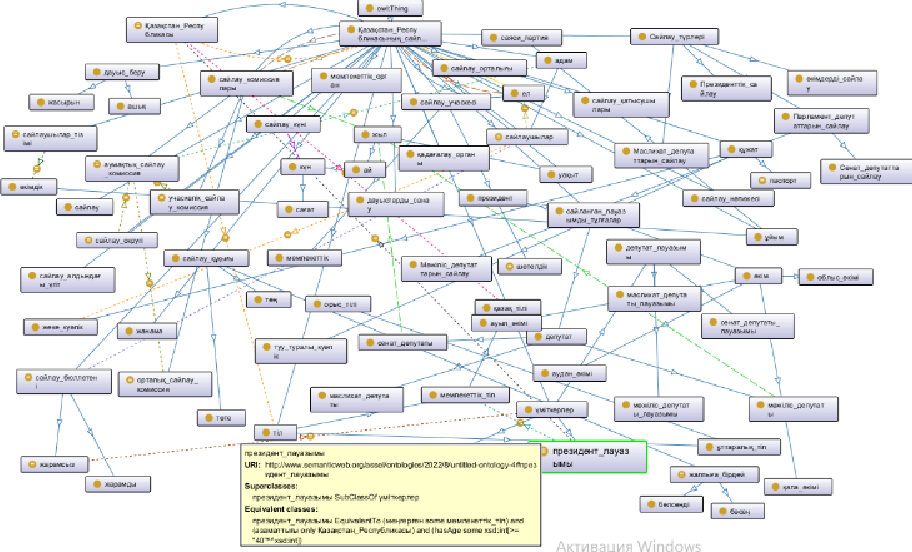
And most often we treat these categories as nodes on a graph, separate and unique. We avoid putting something in the same category as another at the same level and when it happens we create another melded category (think science fiction & fantasy), or they are separate categories treated as properties and then sometimes as categories (black, white, left, right). As a mental model we do tend to treat these categories as concrete and real, they have weight and heft. They are always convenient inventions.
That convenience enables communication, sharing and mutual understanding; though there can be the equivalent of wars in academia about a particular taxonomic decision. The investment in these structures of categories is considerable they are the skeletons of knowledge and we essentially treat those structures as knowledge and predict new things, new concepts just from the manipulation of those categories.
This is all good, well mostly good. There is a very unfortunate side effect. It becomes difficult to see a particular set of categories, a particular mapping of reality in any other way than the way we've created it. Because we believe that there are hard edges where one category begins and another ends and whether some identified thing belongs in one category or almost another or even if the entire set of categories has an entirely different possible configuration.
We also use it to define groups and identities either of ourselves or of others and as an expression of belonging or ownership and with ownership sovereignty or its lack because if an identity category is defined by an authority then they can control it and take it away. A category like citizenship can then be given, earned or taken away. But it is not a category might be said, defended in courts and legislatures, citizenship is a right, and intrinsic property to an individual. Which may well have been true at one time, in a particular context. But now, what was inalien, unable to be removed is now defined and made concrete. It is now a category of identity.
Category is a lever to move or fix our perception of realities.
And it is the same for all of the concrete properties, those properties that help describe and define us, including gender. For those that make gender a necessary and irremoveable part of sexual identity even when it's clear that paradoxes arise this becomes a difficult category to parse. And for those that can see multiple categories as if on two sides of a wheel and separately able to rotate into two changing combinations and the idea that particular combinations could become a significant trespass, or a risk of harm is unknowable to them.
Yet both of these are true at the same time because they are categories too and this is both the power and the tyranny of categories. They can lock us into rigid and stable constructions as well as exciting and novel ones. Category is a lever to move or fix our perception of realities.
There are other levers, but categories are bound to language and it's no real accident that the first accomplishment of language, after the This is Me and You are You, is the Naming of things and the relationships we can arrange them into. And of course this is a basic reason why LLMs are so captivating. Though no LLM can pass the first step of identifying Self and non-Self, everything is made of the patterns we give them and a very large bag of categories.